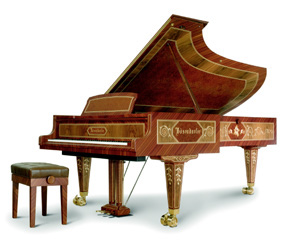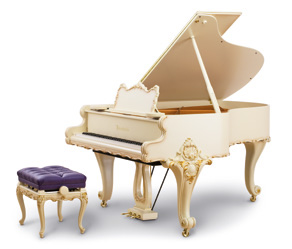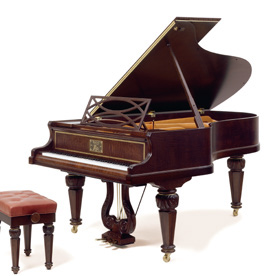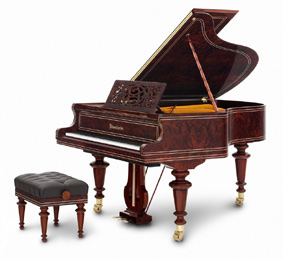

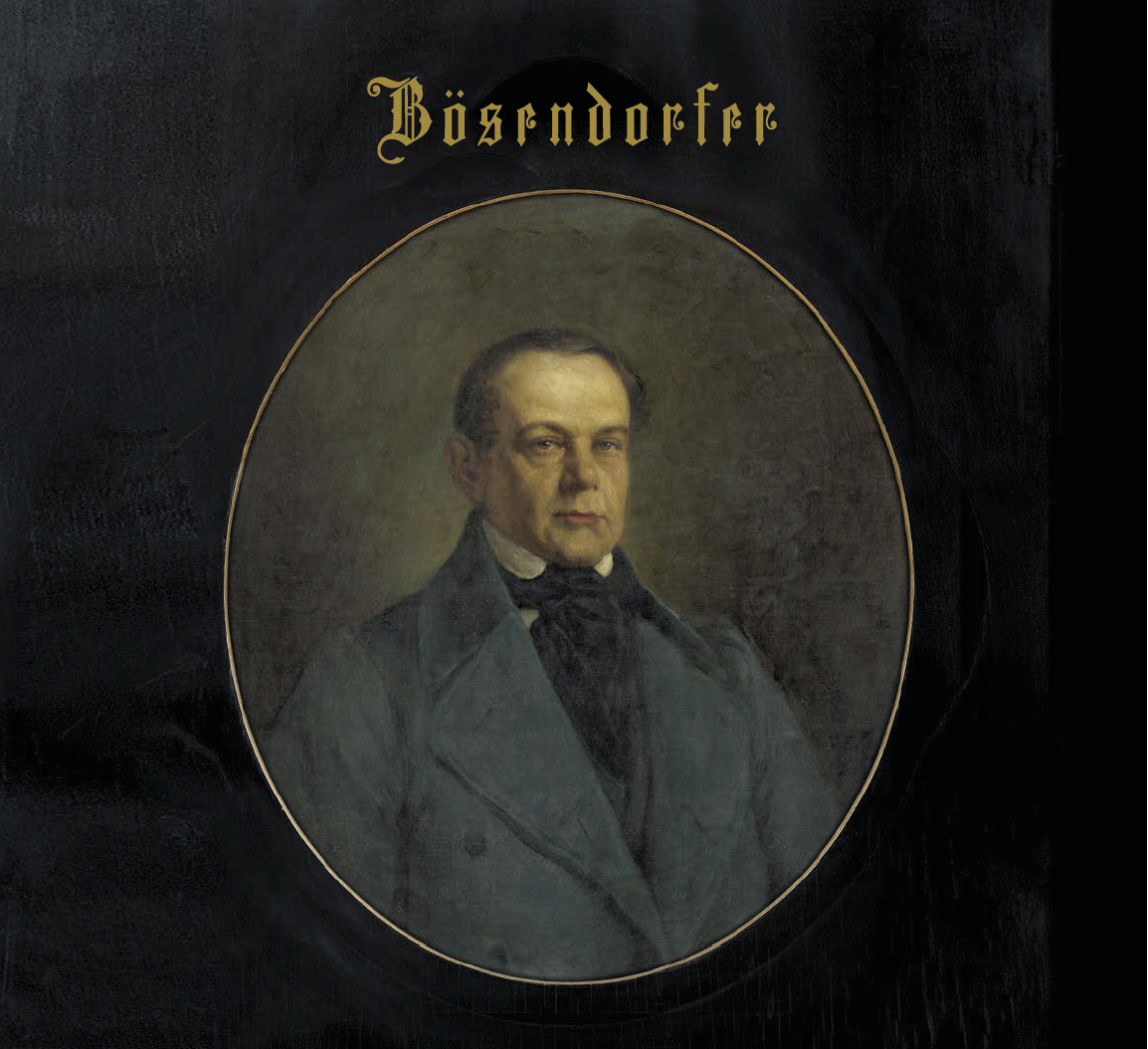
On 25 July 1828 in Vienna, Ignaz Bösendorfer became a member of the prestigious Viennese association of musical instrument makers, with the official registration number 225 669.
This is also the founding date of the oldest piano manufactory in the premium segment that still exists today.
Vienna, 1838: it was well known that not every piano could withstand the passionate, virtuoso playing style of the young composer and pianist Franz Liszt. On the recommendation of friends, he chose a Bösendorfer Grand for his concert in Vienna. Thanks to its superb construction and high quality, to Liszt's amazement he no longer had to hold his artistic spirit in check. The audience was astonished, and after this concert Bösendorfer suddenly became famous. This is how a friendship between Liszt and Bösendorfer began.
In those days pianos were not made for the stage; they were regarded rather as instruments of entertainment, and society events took place behind closed doors. A prominent example of an artist who performed for high society was Franz Schubert. In the first year of its activity Ignaz Bösendorfer manufactured four instruments, and soon, by 1835, this number had grown to 200. In 1839 the Emperor of Austria granted him the title "Imperial and Royal Piano Purveyor to the Court". He was the first manufacturer to hold this title. Thanks to the popularity of Bösendorfer pianos, demand grew and Ignaz Bösendorfer decided to build a new factory. Unfortunately he could not complete this project, as he died in 1859. The factory passed to his son, Ludwig.
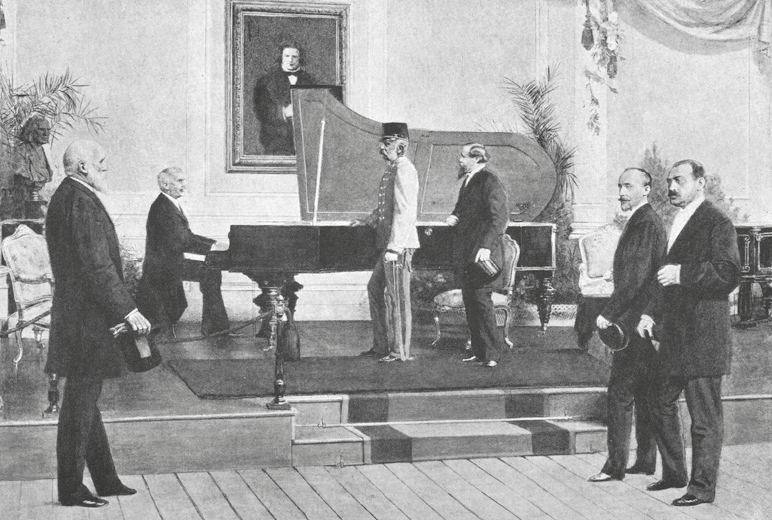
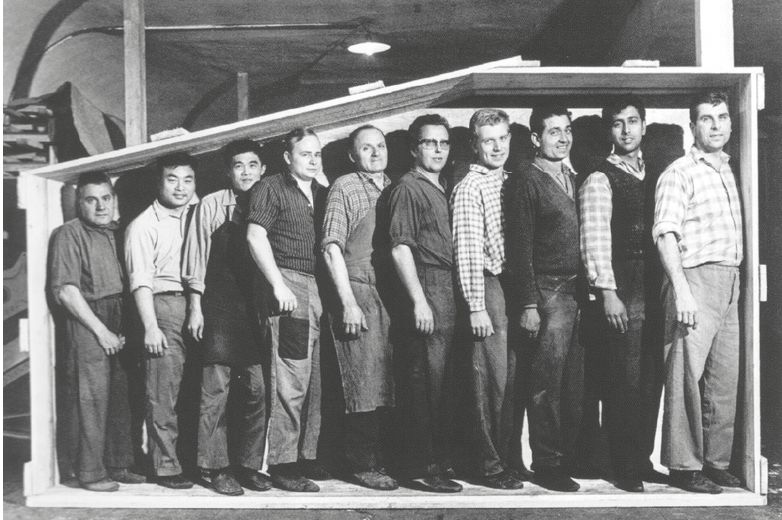
After Ludwig Bösendorfer came the Hutterstrasser era, when in 1909 Ludwig Bösendorfer sold the factory to his friend Carl Hutterstrasser. During this turbulent period of European history the factory suffered repeated losses, both in the years of the Great Depression and in an air raid in the Second World War. Nevertheless it achieved numerous successes, such as the Grand Prix in Geneva and first place in a competition organised by the BBC in 1936.
After the war production gradually resumed, reaching 100 instruments a year. Hutterstrasser's sons, having no heir to leave the factory to, sold it to the Kimball International company of the United States.

A Bösendorfer Grand offers optimal control of the performance. Designed in close collaboration with artists and technicians, the key action of the instrument is finished in the distinctive Bösendorfer style, created specially to help the pianist shape the recital perfectly, from a delicate pianissimo to a magnificent fortissimo. Controllability at play.
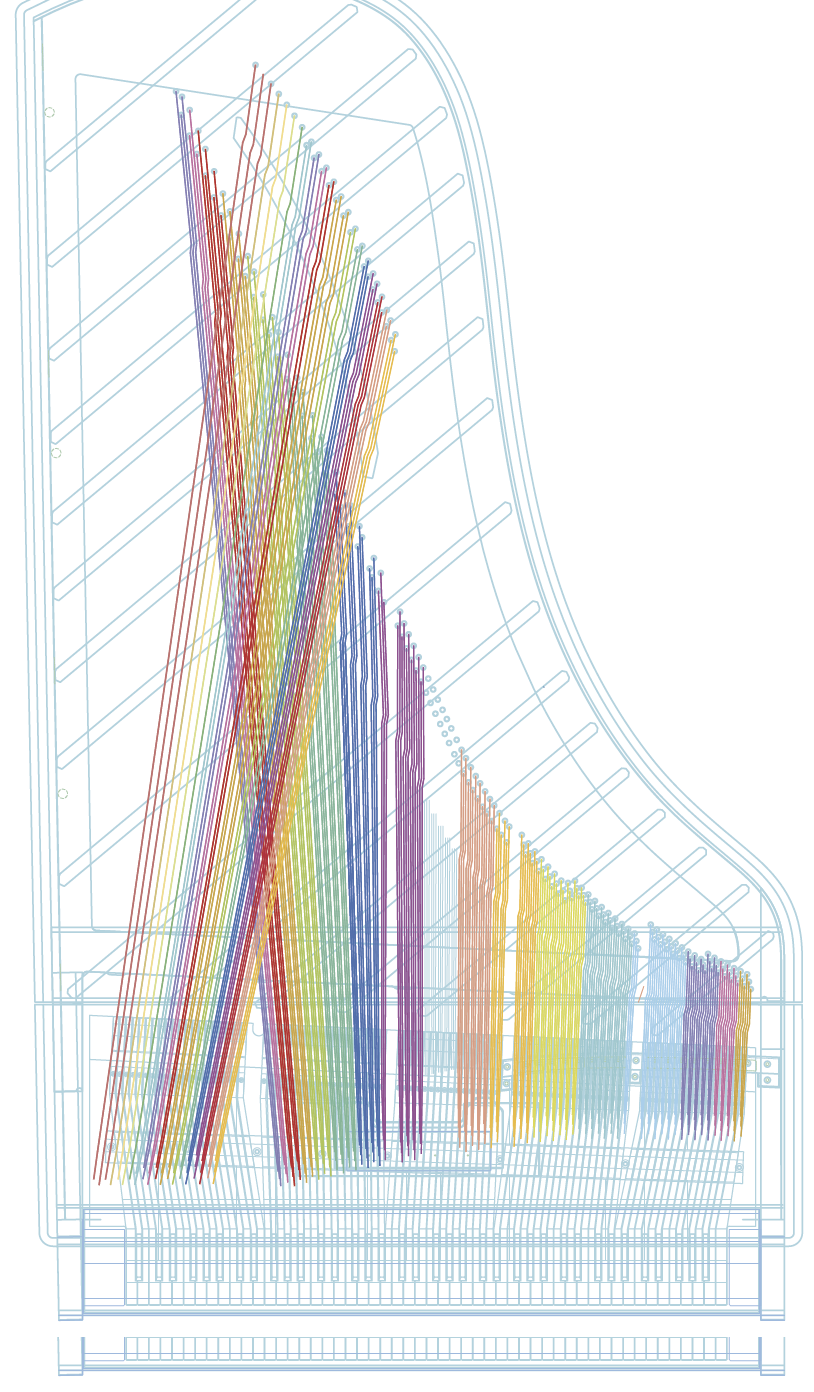
are wound by hand in a particular way found only at Bösendorfer. This gives the piano a unique, lively tonal colour. The strings have a steel core and are wound by hand with one or two layers of bronze, giving the instrument a warm and distinctive tone in the bass register
Bösendorfer is the only piano maker in the world to offer an individual, removable capo d'astro in the treble register; this gives you extremely precise adjustment and a unique sound that you can enjoy for a long time after buying the instrument.
Bösendorfer's specialists use a traditional casting method to make the piano frame, using a sand mould. The frame is made in Austria and is left to rest for 6 months outside the factory; this process releases the internal stress left by casting, allowing the frame to keep its shape stably under the 20-tonne tension exerted by all the stretched strings.
The pinblock consists of 3 layers of maple, each 7 mm thick, glued together and arranged crosswise to the direction of the grain. Mounted on a plate of red beech, the pinblock gives the tuning pins very high stability. The top layer is 1.5 mm thick and made of hazel wood. Each string is installed individually and with great care by technicians, using a loop made by hand specially for this process. The benefit is excellent, long-lasting tuning stability.